

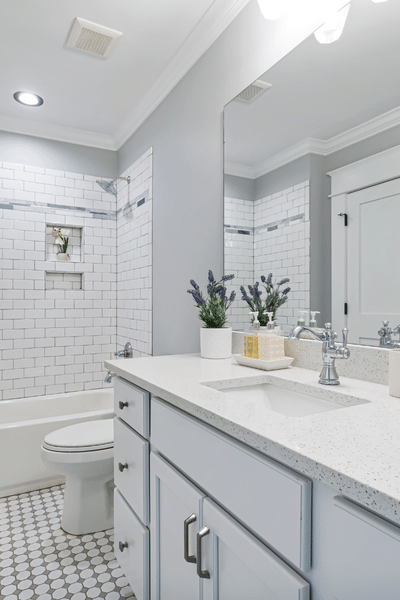
A kitchen cabinet order is a coordinated system, not a set of doors. Understanding doors, boxes, drawers, hinges, panels and decorative hardware helps homeowners compare proposals accurately and prevents missing components during installation.
Door and drawer-front construction
Common visual directions include slab, Shaker, raised-panel and inset-inspired profiles. Confirm door material, center-panel construction, overlay and whether drawer fronts match the door or use a slab configuration.
Cabinet boxes and interior components
Review side and back construction, shelves, hanging rails, finished interiors and exposed ends. Base, wall and tall cabinets serve different loads and access needs, while sink and appliance cabinets require special planning.
Functional hardware
Hinges and drawer glides affect alignment, opening range, weight capacity and daily feel. Pull-outs, lift systems and organizers should be selected for a specific storage need and verified against cabinet dimensions.
Decorative hardware and final details
Knobs, pulls and edge profiles influence the finished style. Confirm drilling locations with sample hardware. Panels, fillers, toe kicks, crown and light rail complete transitions that renderings may not fully communicate.
How to make the right decision about Cabinet Doors, Boxes and Hardware: A Complete Buying Guide
For Cabinet Doors, Boxes and Hardware: A Complete Buying Guide, cabinet Doors, Boxes and Hardware: A Complete Buying Guide should help you make a project decision, not simply collect inspiration. Write down the result you need, the problem in the existing room and the conditions that cannot change. For cabinet doors boxes and hardware, useful goals are specific enough to test: better access, a calmer material palette, easier maintenance, more effective storage or a clearer installation sequence. Rank those goals before comparing products. When two options appear equally attractive, the ranked list provides a rational tie-breaker and prevents a late visual preference from displacing a requirement that affects everyday use.
When applying this guidance to Cabinet Doors, Boxes and Hardware: A Complete Buying Guide, also identify the people who will approve the work and the date by which major choices must be settled. A project can lose time when one person is evaluating appearance while another assumes cost or maintenance is the priority. A one-page brief containing goals, constraints, investment range and desired timing gives the designer, contractor and qualified trade professionals a stable starting point. It also makes later revisions easier to evaluate because every change can be measured against an agreed purpose.
Existing-room details that affect Cabinet Doors, Boxes and Hardware: A Complete Buying Guide
For Cabinet Doors, Boxes and Hardware: A Complete Buying Guide, photograph every wall and record the parts of the room that photographs often miss. For this kitchen or remodeling project, that means field dimensions, circulation, utilities, appliance specifications, structure and installation sequence. Include wide views that show relationships and close views of transitions, damage or unusual construction. Label photographs so they correspond to a simple floor-plan sketch. Preliminary homeowner measurements are valuable for discussion, but final ordering and fabrication should rely on verified field dimensions and current product specifications.
When applying this guidance to Cabinet Doors, Boxes and Hardware: A Complete Buying Guide, existing conditions affect both design and risk. Floors and walls may not be level or square, utilities may be located differently from old drawings, and previous work can be concealed behind finishes. Ask which assumptions remain unverified and when they will be checked. Keeping an assumption log sounds formal, but even a short list prevents provisional information from becoming an accidental order. Resolve the highest-cost unknowns before releasing custom or nonreturnable material.
A practical comparison method for Cabinet Doors, Boxes and Hardware: A Complete Buying Guide
For Cabinet Doors, Boxes and Hardware: A Complete Buying Guide, create a short comparison table for the serious options discussed in Cabinet Doors, Boxes and Hardware: A Complete Buying Guide. Score each one for installed cost, lead time, maintenance, visual compatibility, warranty, repairability and function, durability, maintenance and long-term flexibility. Use the same questions for every option. This avoids giving one favorite a detailed evaluation while accepting vague promises for another. Scores do not make the decision automatically; they expose the tradeoffs that deserve a conversation.
When applying this guidance to Cabinet Doors, Boxes and Hardware: A Complete Buying Guide, request written clarification wherever a category is unclear. “Low maintenance,” “premium,” “custom” and “waterproof” can mean different things in different proposals. Replace broad claims with product-specific facts, approved applications and defined scope. If a choice depends on an exact color or texture, compare cabinet, countertop, flooring and paint samples rather than a screen image. Review samples in the project light, near adjacent materials and in the orientation in which they will be installed.
Budget and scheduling implications of Cabinet Doors, Boxes and Hardware: A Complete Buying Guide
For Cabinet Doors, Boxes and Hardware: A Complete Buying Guide, a selection is not complete until its cost, availability and installation consequences are understood. Ask whether cabinet doors boxes and hardware changes substrate preparation, support, electrical or plumbing work, trim, delivery access or the order of trades. An apparently small upgrade can affect several downstream tasks, while a thoughtful simplification can reduce risk without weakening the design. Compare complete installed outcomes rather than isolated material prices.
When applying this guidance to Cabinet Doors, Boxes and Hardware: A Complete Buying Guide, build the schedule backward from dependencies, not from a preferred completion date. Field verification must precede fabrication; final specifications must precede ordering; suitable site conditions must precede installation. Record long-lead and nonreturnable items separately. Do not schedule demolition around an unconfirmed delivery estimate. A modest contingency in both time and budget is especially important when work touches concealed construction or depends on multiple custom components.
Next steps for Cabinet Doors, Boxes and Hardware: A Complete Buying Guide
Use these resources to continue planning:
- Explore cabinet collections
- Review cabinet products
- Coordinate a kitchen design
- Ask about a complete cabinet quote
For Cabinet Doors, Boxes and Hardware: A Complete Buying Guide, verify measurements, specifications, availability and the written scope before committing to the work. Contact White Matte in Norcross to review your room and next steps.
Frequently Asked Questions
What is cabinet overlay?
Overlay describes how much of the cabinet face frame or box front is covered by the closed door and drawer front. It affects spacing and appearance.
Are cabinet pulls included?
Inclusions vary by quote and cabinet program. Confirm decorative hardware, drilling and installation explicitly in the written scope.